

Showing posts with label early surrealism. Show all posts
Showing posts with label early surrealism. Show all posts
Friday, August 20, 2010
Masked
I leave you this Friday with a photo taken by the french photographer André Ostier of a couple dressed up for a ball given in the 1950's by Baron de Redé at the Hôtel Lambert.


Wednesday, August 18, 2010
So Light is Her Footfall
With all the crazy shoes designers have the ability to design with the new given technology, spanning from McQueen' alien-like hunched platforms (S/S 2010), the Lego palace Balenciaga shoes (A/W 2007), it's pretty amazing that no designer has yet to tackle the idea of creating some kind of shoe embodying a cat. The closest thing to this idea would perhaps be Topshop's kitty flat. But I'd like to see something even closer to the resemblance of an actual cat. Maybe something like the shoes/feet in Romanian artist Victor Braunser's Mitsi (1939).


Friday, August 13, 2010
Eileen Agar's Ceremonial Hat for Eating Bouillabaisse
Eileen Agar (born 1899) was a British artist whose paintings and photographs are often associated with the surrealism movement. Agar had an interesting life, as she achieved almost overnight success after the first International Surrealist Exhibition in London at the New Burlington Galleries in 1936. One of her most important contributions to the world of surrealism and fashion- both together and as separate things on their own is her Ceremonial Hat for Eating Bouillabaisse. The hat itself was constructed of a cork base, painted yellow and blue, and was decorated with an orange colored plastic flower, a blue plastic star, assorted shells, two types of coral painted green and pink, two star fish, twists of paper, a very large glass bead, a piece of jigsaw puzzle, a piece of tree bark and a large fish bone. Agar placed a high value on the hat, and kept it in her own possession until her death 1991. The hat is now in the Victoria and Albert museum in London.


Monday, August 9, 2010
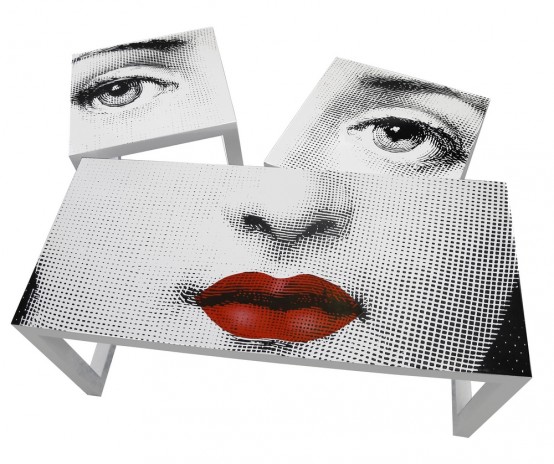
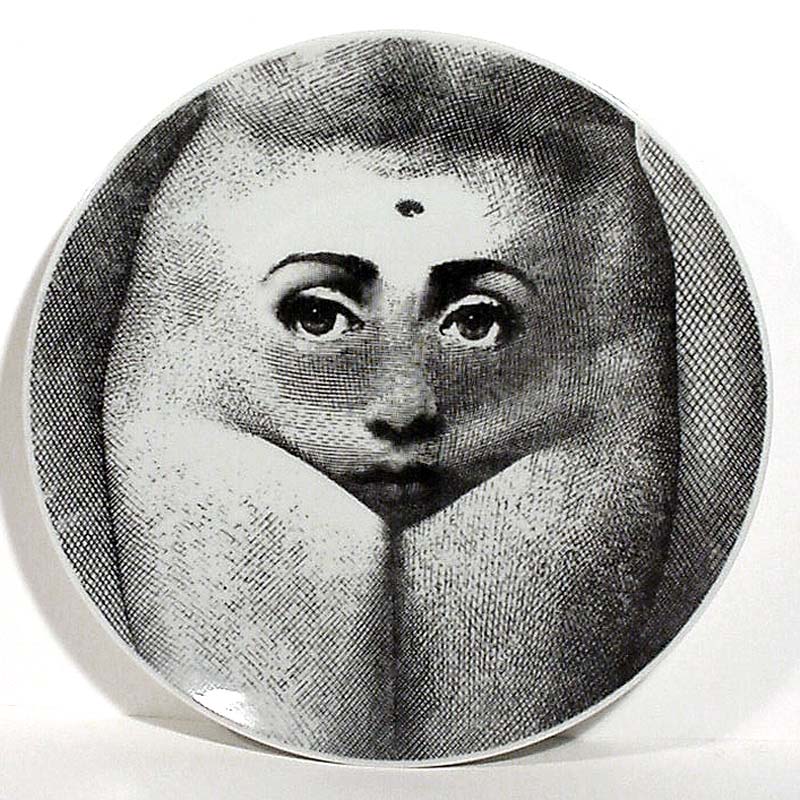
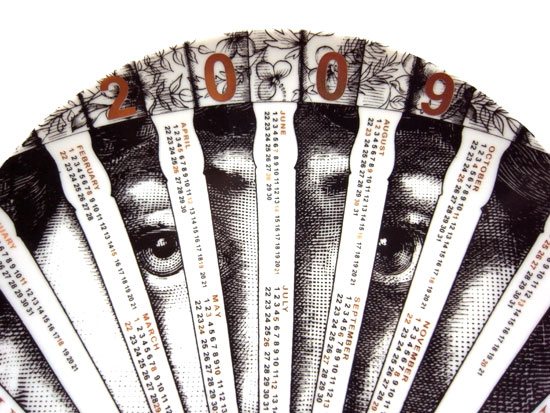
Fornasetti's Lina Cavalieri
Piero Fornasetti (1913-1988) was a painter, interior decorator, sculptor, and engraver from Italy. Out of the 11,000 items he created, over 500 of them consist of the face of one single woman; the Italian operatic soprano Lina Cavalieri. The Italian beauty's face spans over plates, paintings, and clocks, and other various objects of design. So, why create so many things related to one woman? The simple explanation Fornasetti offers is this: "I began to make them and I never stopped."






Tuesday, August 3, 2010
L'exposition internationale du surrealisme//
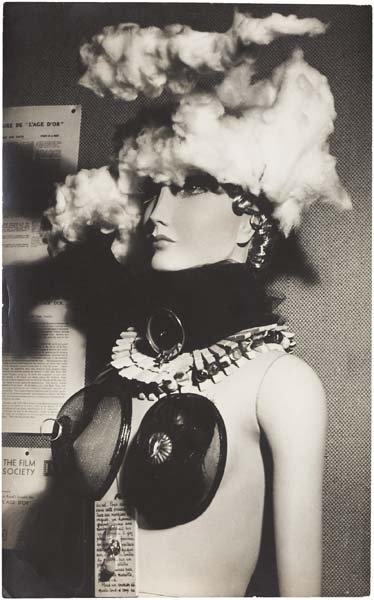
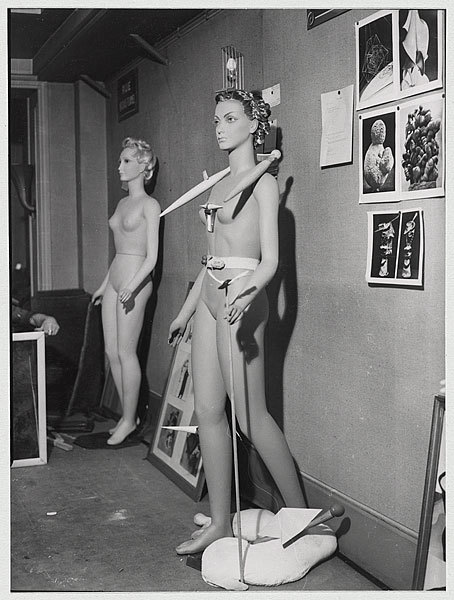
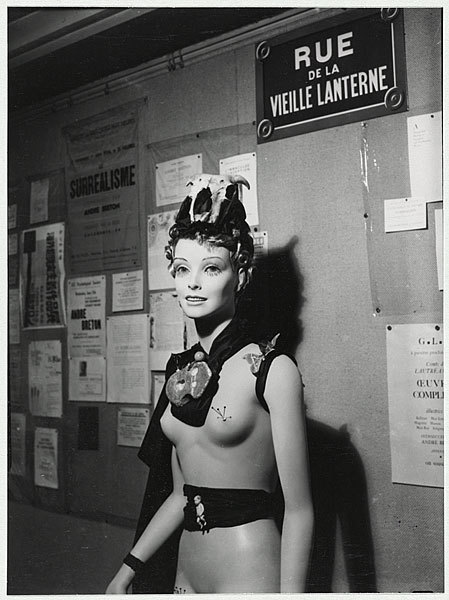
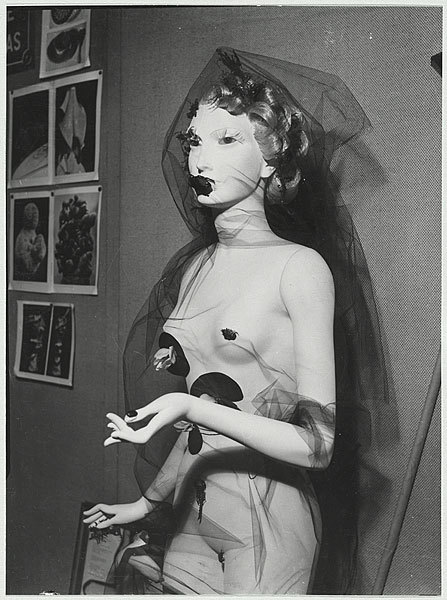
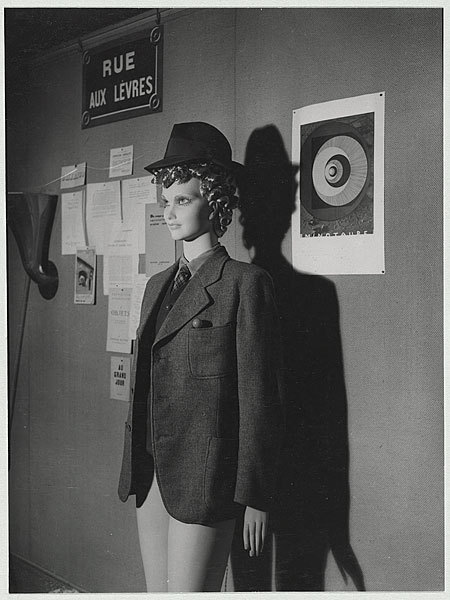
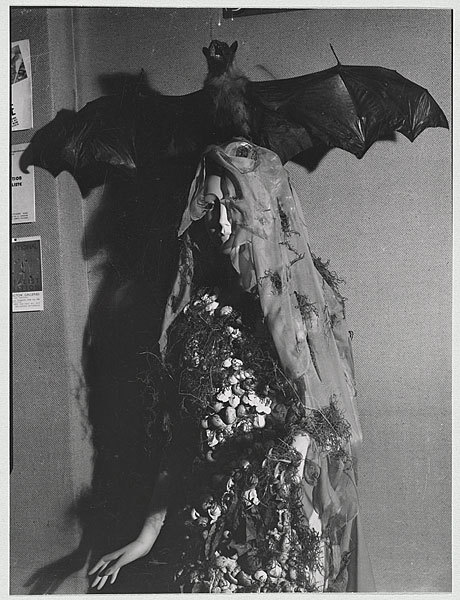
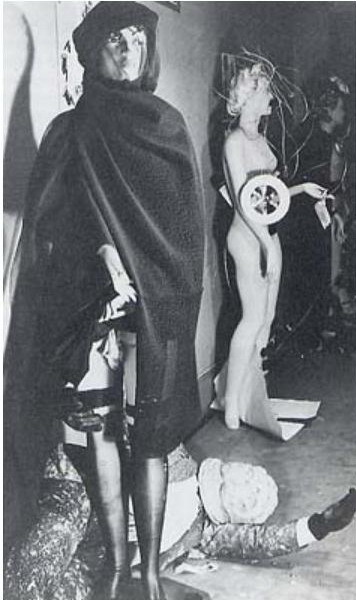
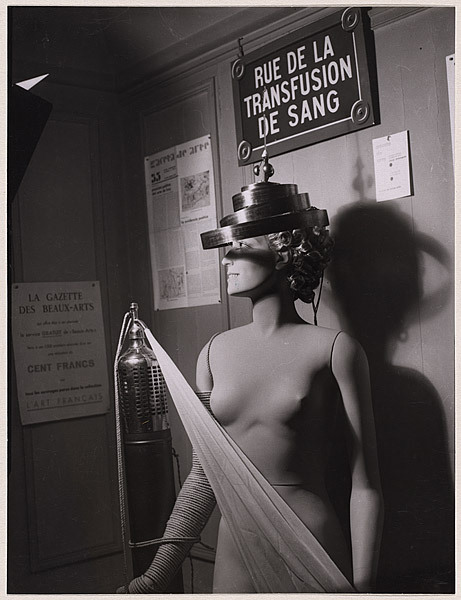
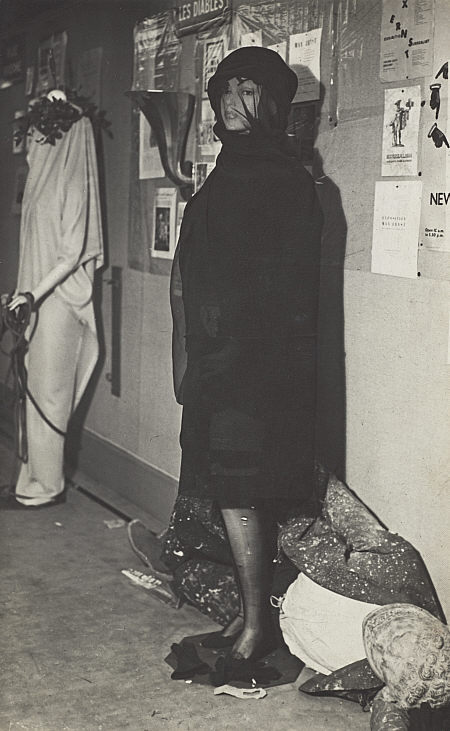
The year is 1938, in Paris. Excitement runs fluid in the air as everyone holds their breath in anticipation of the approaching movement- surrealism. André Breton and Paul Éluard, both writers and founders of the surrealism movement organized the Exposition Internationale du Surréalisme at the Galerie Beaux-Arts in Paris. Here, installations, photographs, and other outrageous and avant-garde works by artists of the upcoming movement were showcased. Salvador Dalí, Óscar Dominguez, Marcel Duchamp, Leo Malet, André Masson, Joan Miró, Wolfgang Paalen, Kurt Seligmann, Yves Tanguy, Marcel Jean, Max Ernst, Espinoza, Maurice Henry, Sonia Mosse, and Man Ray were among the select artists that were given mannequins and encouraged to outfit them in any possible way they wanted. Ah, surrealism and fashion. Is there anything better?



Friday, May 21, 2010
Watch out!

Because you never know when a 100 foot tall Anita Ekberg will appear, wandering the streets of your hometown, ready to have some "fun"! From Le tentazioni del dottor Antonio of Boccaccio '70, by Federico Fellini.
Friday, March 19, 2010
Salvador Dali's Hats
Dali: One may know him as an artist of all sorts. His repertoire includes drawing, painting, film, sculpture, and photography. But were you aware of his collection of grandiose hats? Dali often wore imaginative hats; from Rhino's horns to Pa de Crostons bread.


Sunday, February 28, 2010
Desks, of all things
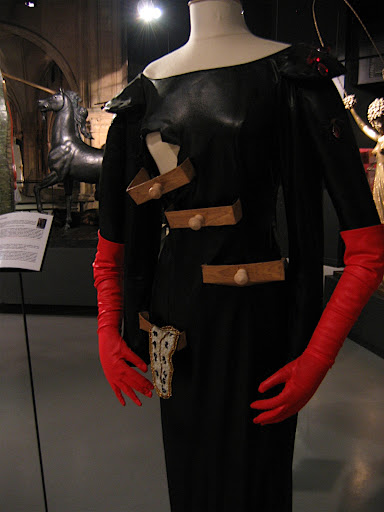
I am one who regards the surrealist/futurist movement as one of the most profound enterprises of all time. The dough of an idea starts as a bland and wanton lump, but when other elements are added, other spices are combined, some kind of unmitigated, almighty bread comes forth. It's the directness of the connections from art to fashion- fashion to art. Everything was looked at as a art. Everything had a superior concept behind it. The surrealists took perception and added a drop of psychology. Elsa Schiaparelli, an Italian fashion designer (1890-1973), collaborated with Salvador Dali, taking a few of his artworks to literal terms.


Monday, April 20, 2009
Jean Cocteau's La belle et la bête
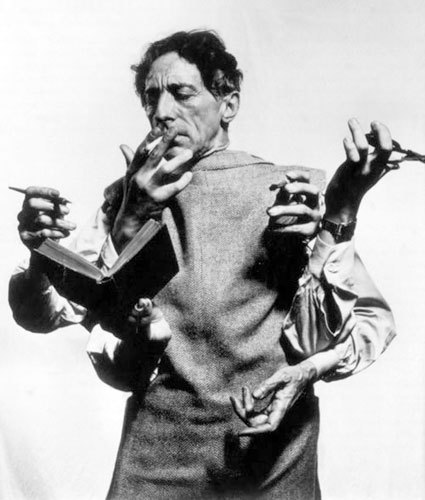
You've undoubtedly seen Disney's Beauty and The Beast, but have you seen Cocteau's La belle et la bête? In comparison, Disney's is far subordinate. Its pastels seem cadaverous to Cocteau's black and white excellence. Though it is a matter of preference. Surrealistic opulent madness, or catered regularity. The raw revelry dispels any fear of the immediate strangeness of the film. Just look at the costumes.
Produced in 1946 by poet, surrealist, novelist, dramatist, boxing manager, playwright, and filmmaker: Jean Cocteau.


Produced in 1946 by poet, surrealist, novelist, dramatist, boxing manager, playwright, and filmmaker: Jean Cocteau.

Sunday, April 5, 2009
Un chien andalou
One of the more influential films of the early surrealism movement was Un chien andalou produced in 1928 by Spanish writer/directors Luis Buñuel and Salvador Dalí. 16 full minutes of dead and rotting donkies, slit eyeballs, and dream logic may amount to too much for some people to handle, but i think it's amazing by way of grandeur weirdness. Laiden only with one or two Argentinian tangos, silence remains. The only rule of making this film?
"No idea or image that might lend itself to a rational explanation of any kind would be accepted.", spoken by Buñuel himself. He also stated that "Nothing, in the film, symbolizes anything. The only method of investigation of the symbols would be, perhaps, psychoanalysis." So there you go, art without "meaning". Further proof that not all art has to symbolize something or that the artist is "trying to say something through their art". Take that you "higher level thinkers".
"No idea or image that might lend itself to a rational explanation of any kind would be accepted.", spoken by Buñuel himself. He also stated that "Nothing, in the film, symbolizes anything. The only method of investigation of the symbols would be, perhaps, psychoanalysis." So there you go, art without "meaning". Further proof that not all art has to symbolize something or that the artist is "trying to say something through their art". Take that you "higher level thinkers".
Subscribe to:
Posts (Atom)